JKA Karate
Before he established the Japan Karate Association, Master Funakoshi Gichin laid out the Twenty Precepts of Karate (Niju Kun), which constitute the foundations of the martial art. In these twenty principles, which are heavily based on Bushido and Zen, lies the philosophy of the JKA Karate.
Alongside the twenty precepts, Funakoshi Gichin, the founder of modern karate, also devised five fundamental goals (Dojo Kun) to have in mind during each training inside the dojo.
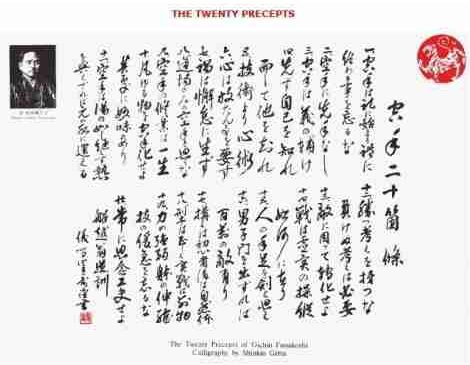
Niju kun – Twenty Precepts
- Never forget: karate begins with rei and ends with rei (Rei means courtesy or respect, and is represented in karate by bowing)
- There is no first attack in karate
- Karate supports righteousness
- First understand yourself, then understand others.
- The art of developing the mind is more important than the art of applying technique
- The mind needs to be freed
- Trouble is born of negligence
- Do not think karate belongs only in the dojo
- Karate training requires a lifetime
- Transform everything into karate; therein lies its exquisiteness
- Genuine karate is like hot water; it cools down if you do not keep on heating it
- Do not think of winning; you must think of not losing
- Transform yourself according to the opponent
- The outcome of the fight depends on one’s control
- Imagine one’s arms and legs as swords
- Once you leave the shelter of home, there are a million enemies
- Postures are for the beginner; later they are natural positions
- Do the kata correctly; the real fight is a different matter
- Do not forget control of the dynamics of power, the elasticity of the body and the speed of the technique
- Always be good at the application of everything that you have learned.
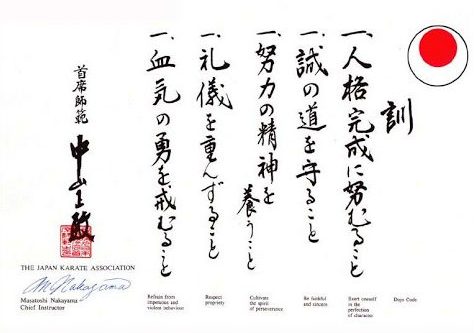
Dojo kun – Training Goals and Precepts
The Dojo Kun are the guiding principles of the dojo (the place where one practices karate) and of karate training in general. Here is the original Shotokan Karate Dojo Kun established by Gichin Funakoshi: